
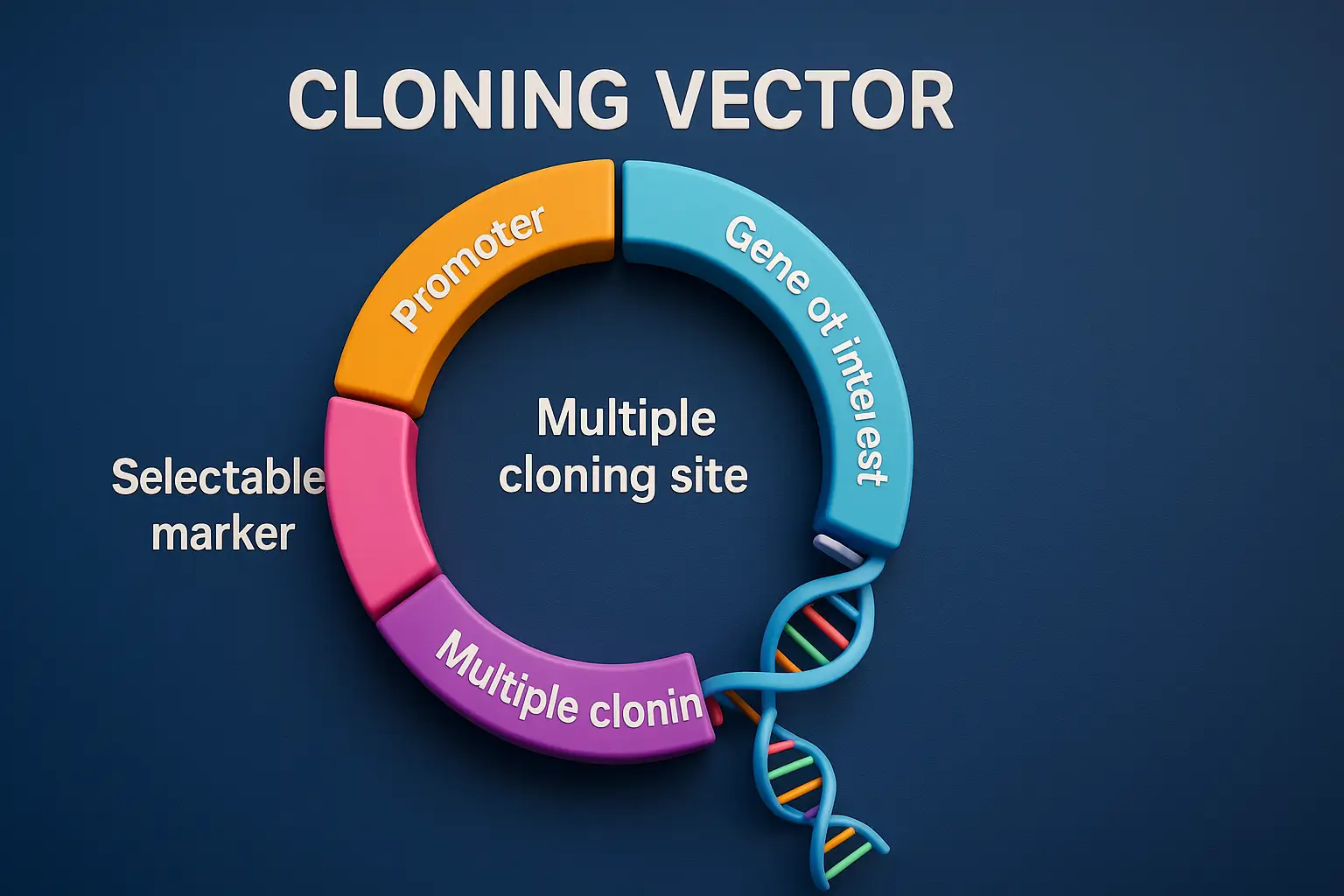
Definition
- A cloning vector is a small, self-replicating DNA molecule that is used to transfer foreign genetic material into a host cell.
- It acts as a carrier for the DNA fragment of interest, allowing it to be replicated and expressed in the host.
Characteristics of an Ideal Cloning Vector
- A good cloning vector must have the following features:
- Origin of Replication (ori) → Enables the vector to replicate independently in the host.
- Selectable Marker → A gene (e.g., antibiotic resistance) that helps identify cells containing the vector.
- Multiple Cloning Site (MCS) → Contains recognition sites for multiple restriction enzymes to facilitate gene insertion.
- Small Size → Smaller vectors are easier to manipulate.
- High Copy Number → Ensures large-scale production of recombinant DNA.
Advertisements
Types of Cloning Vectors

- Plasmids → Small, circular DNA molecules found in bacteria (e.g., pBR322, pUC19).
- Bacteriophages (Phage Vectors) → Viruses that infect bacteria (e.g., λ phage).
- Cosmids → Hybrid of plasmids and bacteriophage λ DNA, can carry larger DNA fragments.
- BACs (Bacterial Artificial Chromosomes) → Used for cloning very large DNA fragments (100-300 kb).
- YACs (Yeast Artificial Chromosomes) → Used for cloning extremely large DNA fragments (up to 1000 kb).
Advertisements
Examples of Cloning Vectors
- pBR322 → One of the first widely used plasmid vectors, contains ampicillin and tetracycline resistance genes.
- pUC19 → A high-copy-number plasmid with a lacZ marker for blue-white screening.
λ Phage → Can carry larger DNA fragments than plasmids.
Advertisements