
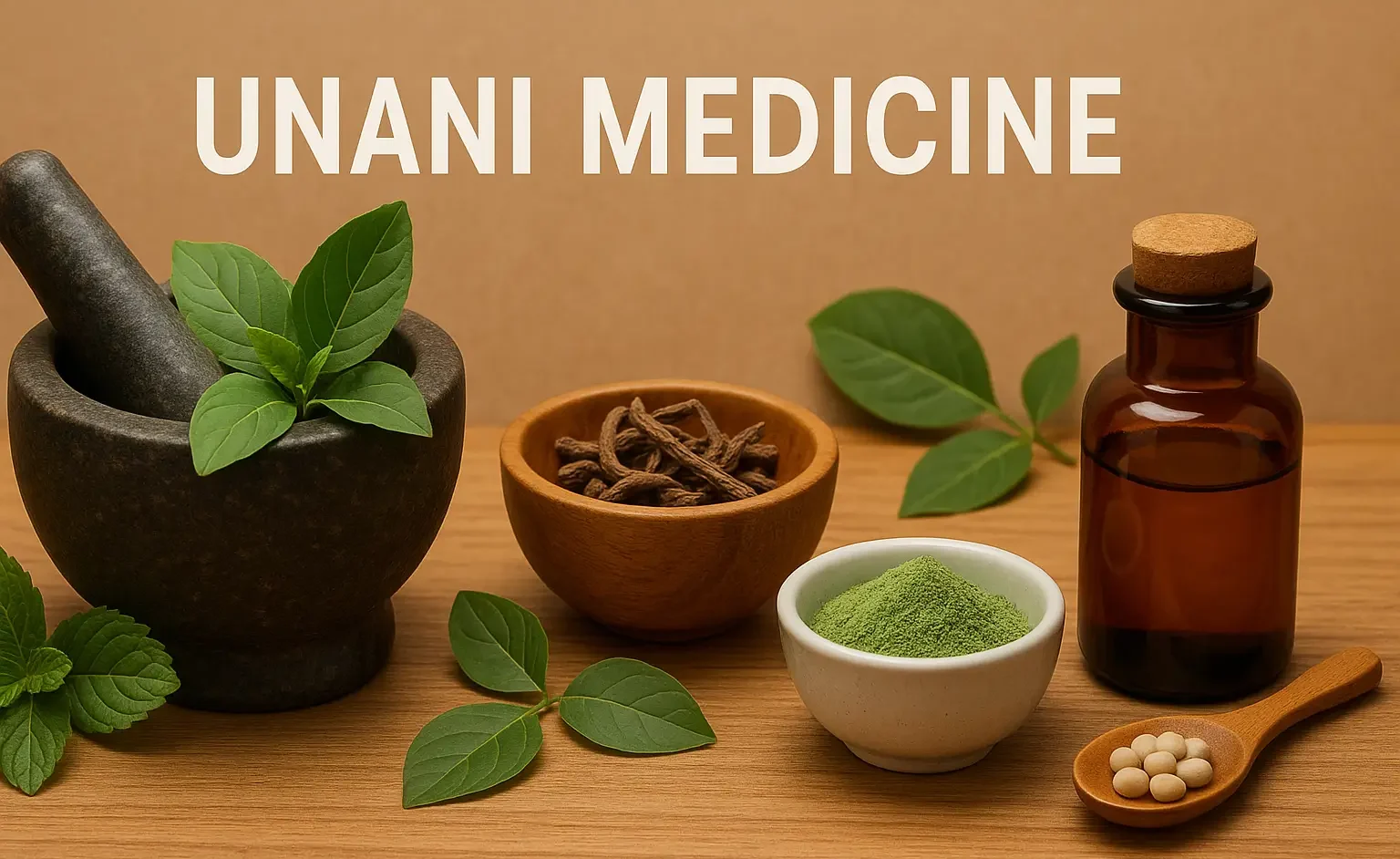
Overview of Unani Medicine
- Unani medicine, also known as Greco-Arabic medicine, originated from the teachings of Hippocrates (Greece) and Galen (Rome), later developed by Arab and Persian scholars like Avicenna (Ibn Sina).
- It is widely practiced in India, the Middle East, and South Asia.
Principle
- The Unani system is based on the humoral theory, which states that the human body contains four humors:
- Dam (Blood)
- Balgham (Phlegm)
- Safra (Yellow Bile)
- Sauda (Black Bile)
- The balance of these humors ensures good health, while an imbalance leads to diseases.
Diagnosis in Unani Medicine
- Nabz (Pulse Diagnosis)
- Urine Examination
- Stool Examination
- Observation of Skin, Eyes, and Tongue
- Detailed case history analysis (Temperament and Humoral Imbalance)
Advertisements
Role of Pharmacognosy in Unani Medicine
- Identification of Medicinal Plants – Pharmacognosy helps in identifying key Unani medicinal herbs like Gilo (Tinospora cordifolia), Saffron, Aloe Vera, and Senna.
- Standardization of Herbal Drugs – Ensures quality control through microscopic and chemical analysis.
- Development of Unani Formulations – Used in making Sharbat (Syrups), Majoon (Confections), Hab (Pills), and Roghan (Oils).
- Safety and Efficacy Studies – Validating the traditional claims of Unani herbs through phytochemical and pharmacological research.
Advertisements