History of Indian pharmacyHistory of Indian pharmacy

Introduction to Dosage Forms

Dosage forms are the physical formulations of drugs, prepared to ensure the safe, effective, and accurate administration of the active pharmaceutical ingredient (API) to patients. They are designed to account for various factors, including the drug’s properties, pharmacokinetics (how the drug is absorbed, distributed, metabolized, and excreted), pharmacodynamics (the effects of the drug on the … Read more

History of Indian pharmacy

History of Indian pharmacy

History of Indian pharmacy traces ancient Ayurveda, Siddha, and herbal traditions in drug use. The History of the Pharmacy profession in India can be divided into four main phases: ancient history, the colonial period, the post-independence period, and the modern era. Ancient History: Pharmacy in India has roots in traditional systems of medicine like Ayurveda, … Read more

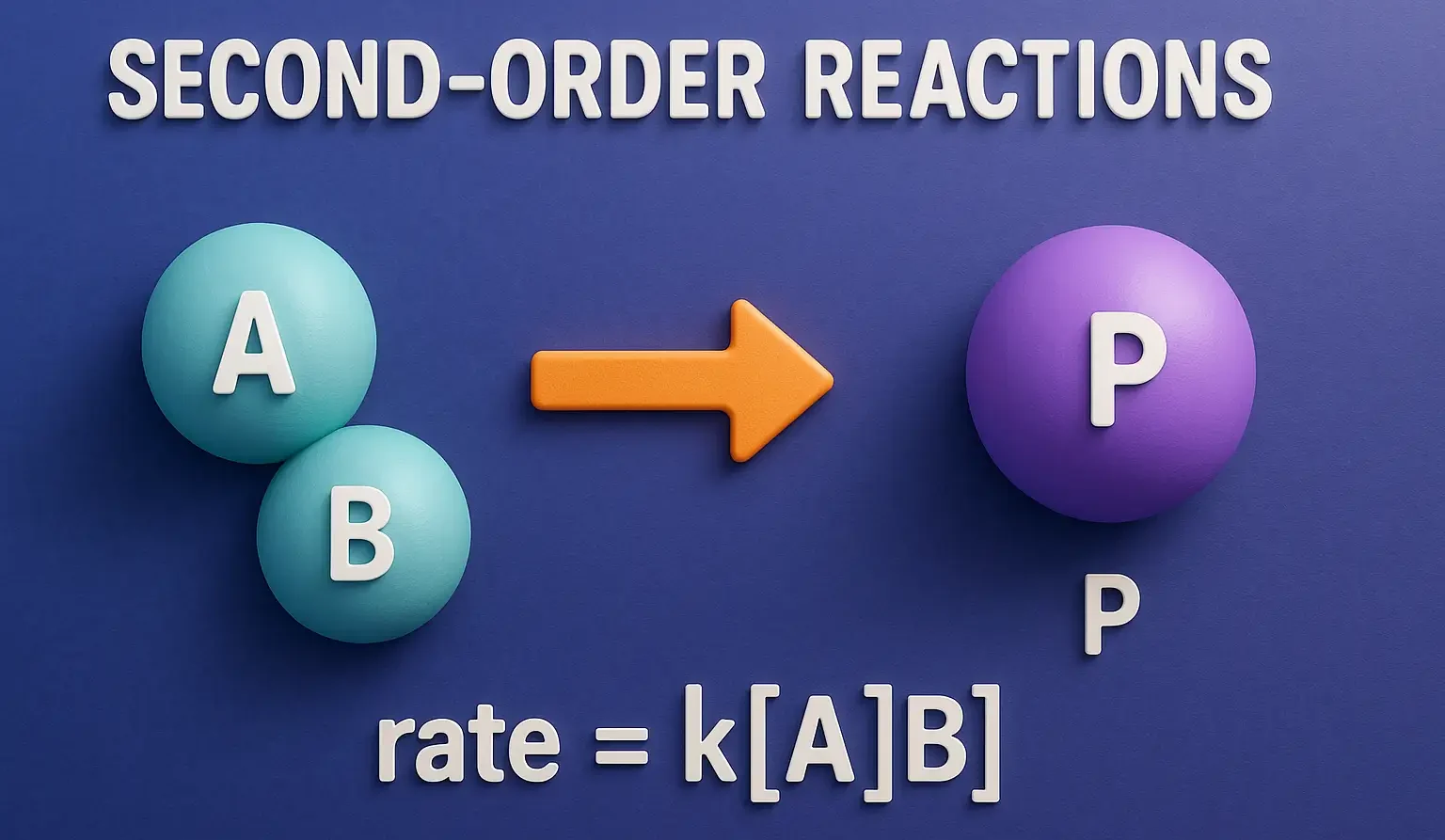
Second-Order Reactions

Second-Order Reactions

Definition: Rate depends on either: Square of one reactant: $\text{Rate} = k[A]^2$ Product of two reactants: $\text{Rate} = k[A][B]$ Integrated form (when A = B): $\tfrac{1}{[A]_t} = \tfrac{1}{[A]_0} + kt$ Derivation: Separate variables: $\frac{d[A]}{[A]^2} = -k \, dt$ Integrate both sides: $\int_{[A]_0}^{[A]} \frac{d[A]}{[A]^2} = -k \int_{0}^{t} dt$ $\left[ -\frac{1}{[A]} \right]_{[A]_0}^{[A]} = -kt$ $- \frac{1}{[A]} + … Read more

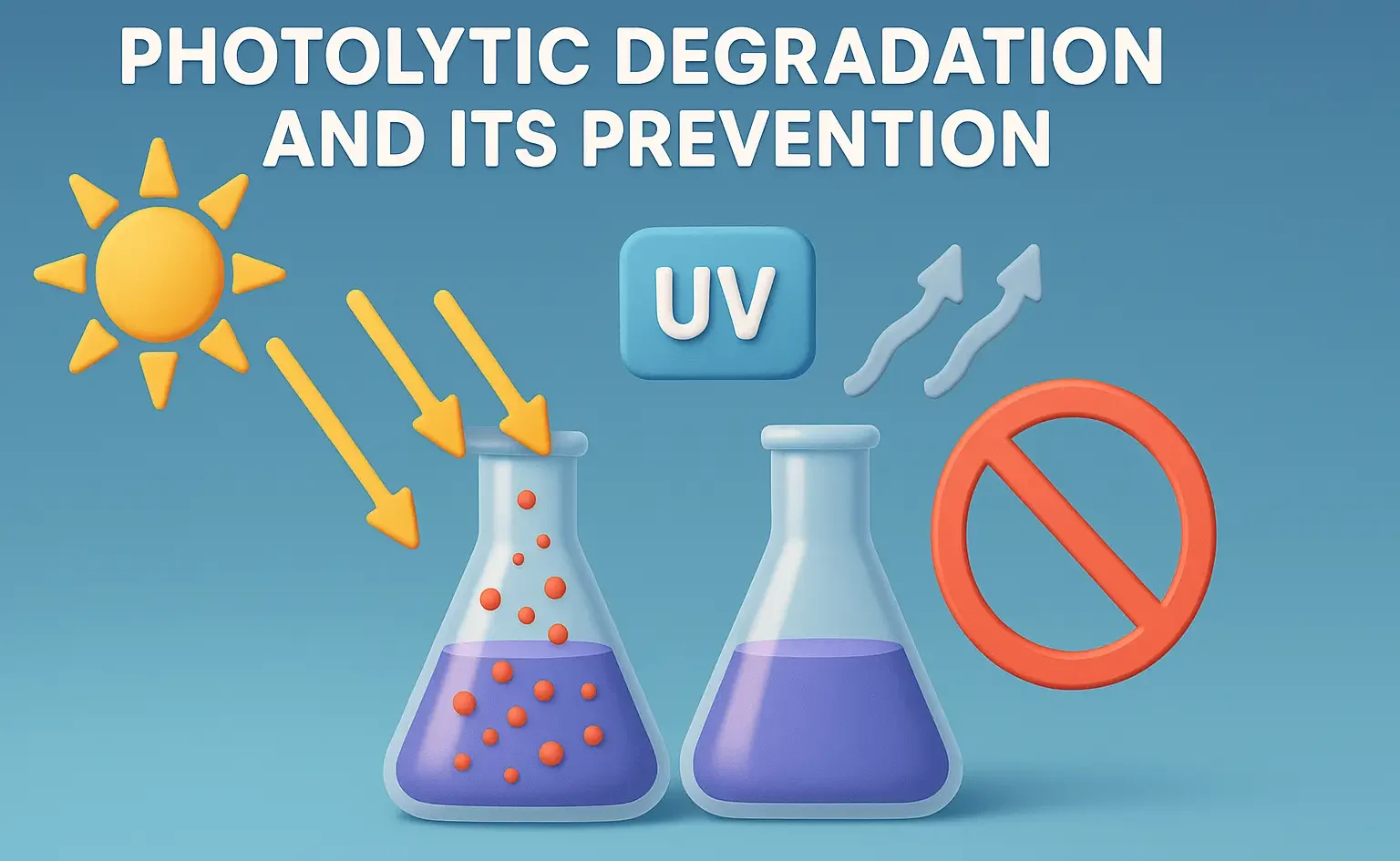
Photolytic Degradation and Its Prevention

Photolytic Degradation and Its Prevention

Definition: Photolytic (or photodegradation) is the degradation of drug substances due to exposure to light, especially UV and visible light. It leads to chemical breakdown and loss of potency, or formation of toxic by-products. Mechanism: Light provides energy that excites electrons in drug molecules. Excited-state molecules may undergo bond cleavage, oxidation, or isomerization. Photodegradation can … Read more

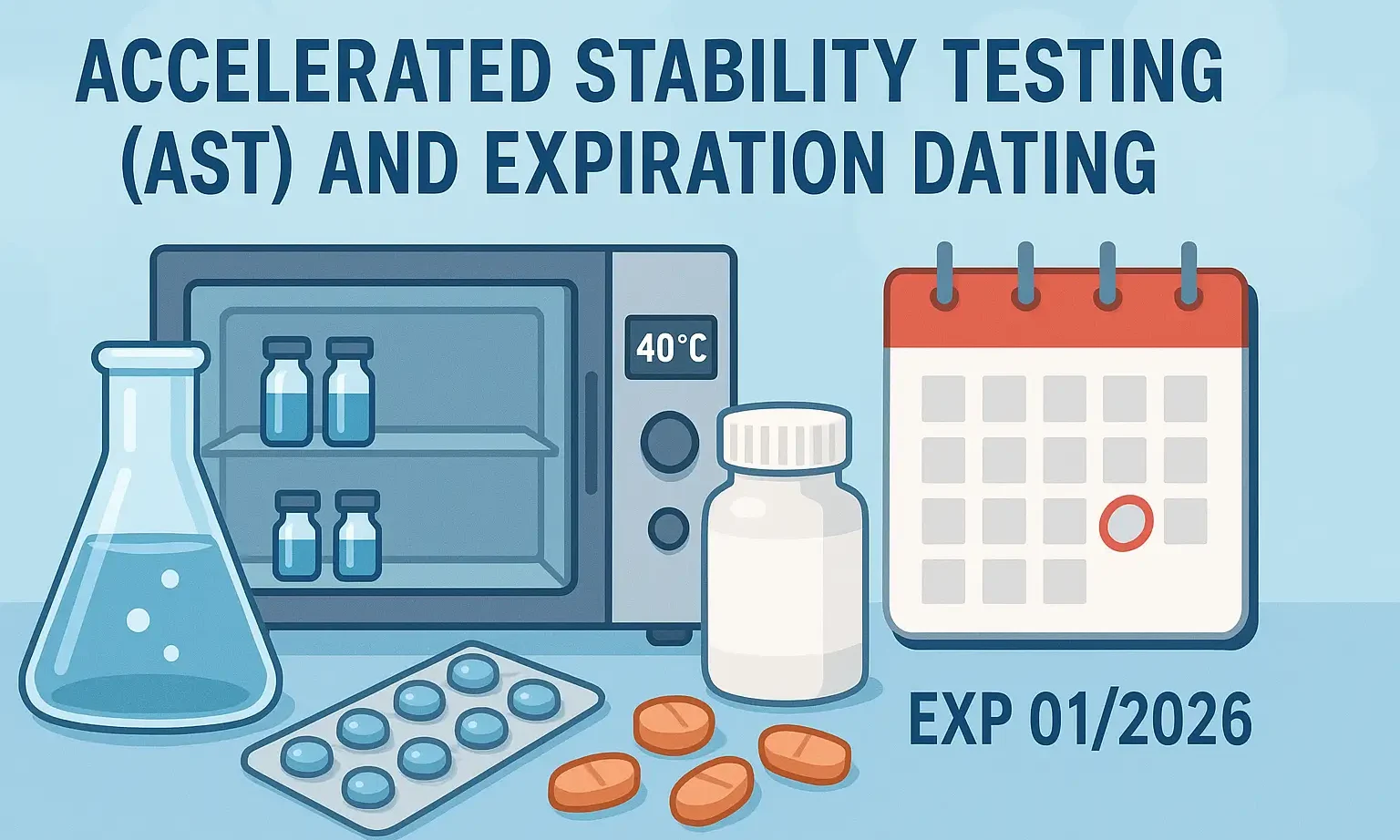
Accelerated Stability Testing (AST) and Expiration Dating

Accelerated Stability Testing (AST) and Expiration Dating

Purpose: Accelerated Stability Testing (AST) and Expiration Datingis used to predict the shelf life (expiration date) of a pharmaceutical product by subjecting it to elevated stress conditions (temperature, humidity, light) to speed up degradation reactions. Why It’s Important: Ensures drug efficacy, safety, and quality over time. Helps set expiration dates and storage recommendations. Aids in … Read more

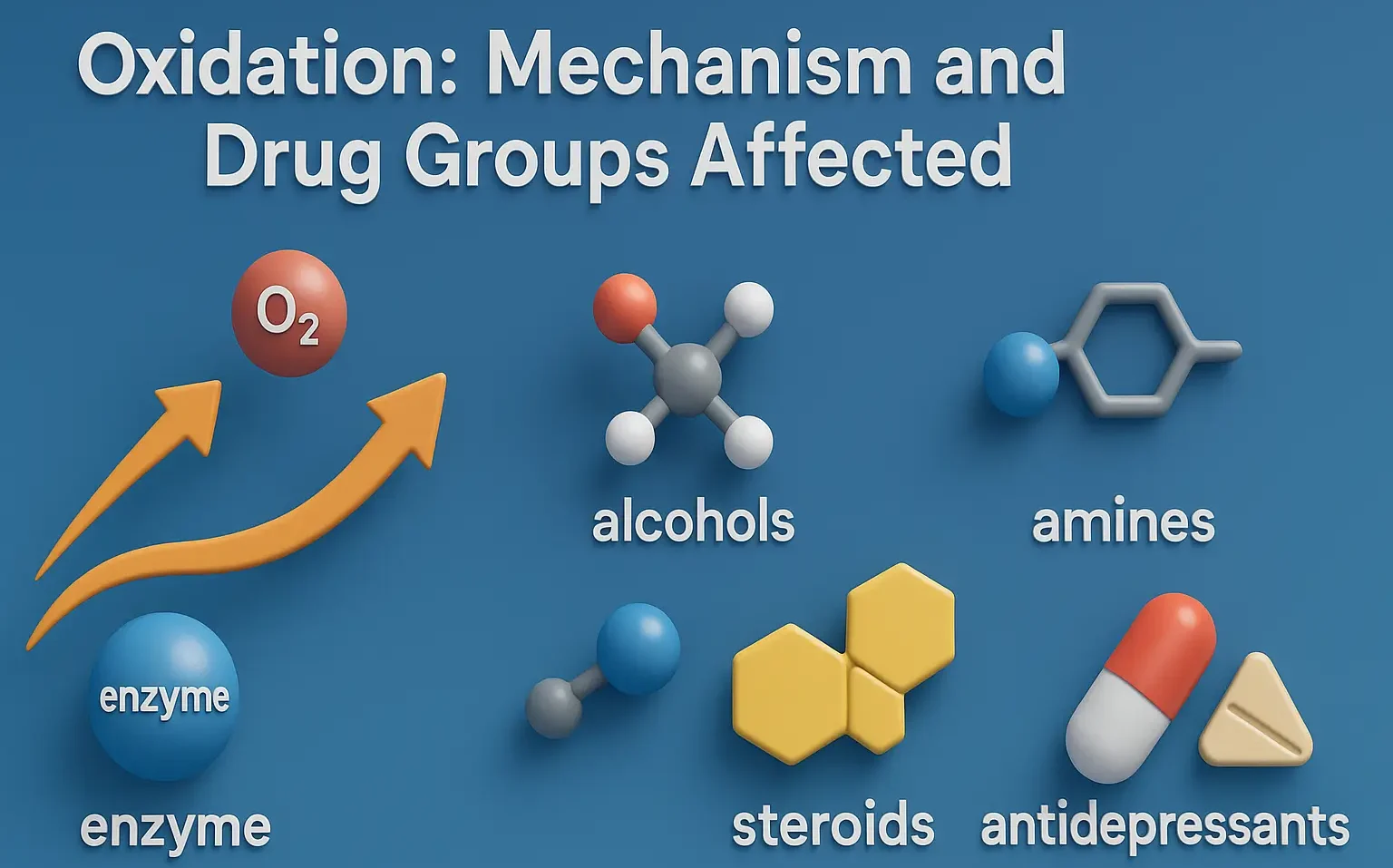
Oxidation: Mechanism and Drug Groups Affected

Oxidation Mechanism and Drug Groups Affected

Mechanism: Oxidation is a process involving electron loss, often initiated by oxygen or free radicals. It can be accelerated by light, heat, trace metals, or pH. Basic pathway: $RH + O_2 \;\rightarrow\; ROOH \;\rightarrow\; RO\cdot + OH\cdot$ $\mathrm{RH} + \mathrm{O}_2 \rightarrow \mathrm{ROOH} \rightarrow \mathrm{RO}^{\bullet} + \mathrm{OH}^{\bullet}$ Commonly Affected Drug Classes: Phenols: epinephrine, morphine Thiols: captopril … Read more

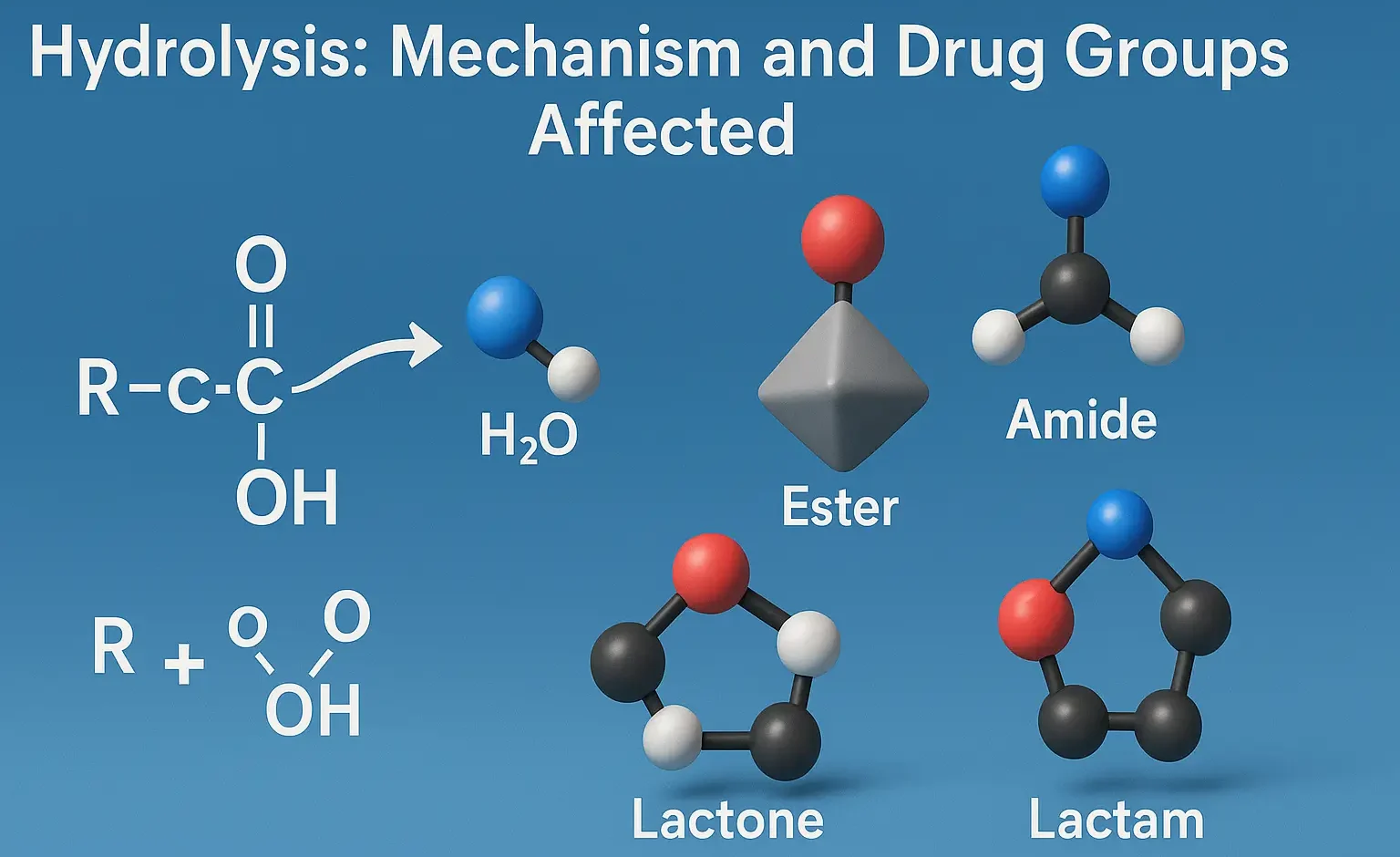
Hydrolysis

Hydrolysis

Mechanism of Hydrolysis: Hydrolysis involves nucleophilic attack of water on labile functional groups, breaking chemical bonds such as esters and amides. Example: $\mathrm{R{-}COOR’} + H_{2}O \;\longrightarrow\; \mathrm{R{-}COOH} + \mathrm{R’OH}$ Commonly Affected Drug Classes: Esters: aspirin, procaine Amides: lidocaine, procainamide Lactams: penicillins, cephalosporins Carbamates, imines Stabilization Strategies for Hydrolysis Strategy Explanation pH control (buffering) Adjust formulation … Read more

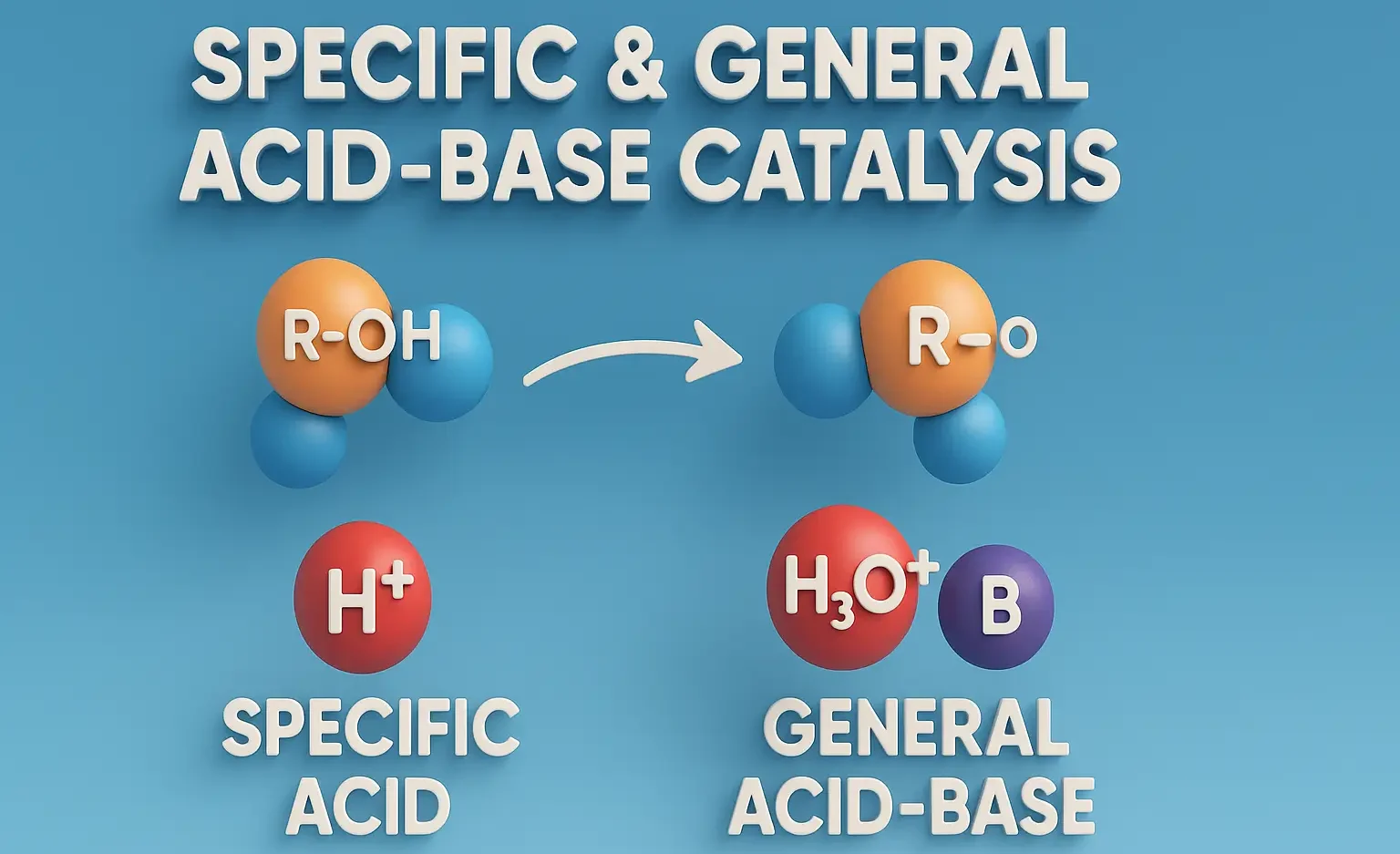
Specific & General Acid-Base Catalysis

Specific & General Acid-Base Catalysis

Specific Acid/Base Catalysis: Catalysis by hydronium (H₃O⁺) or hydroxide (OH⁻) only. Rate is pH-dependent. Rate law: \(\text{Rate} = k_H [H_3O^+] + k_{OH} [OH^-]\) General Acid/Base Catalysis: Catalysis by any proton donor (acid) or proton acceptor (base), e.g., acetate, phosphate, ammonia. Buffers can contribute to catalysis. Rate law (general form): $\text{Rate} = k + k_{AH}[AH] + … Read more

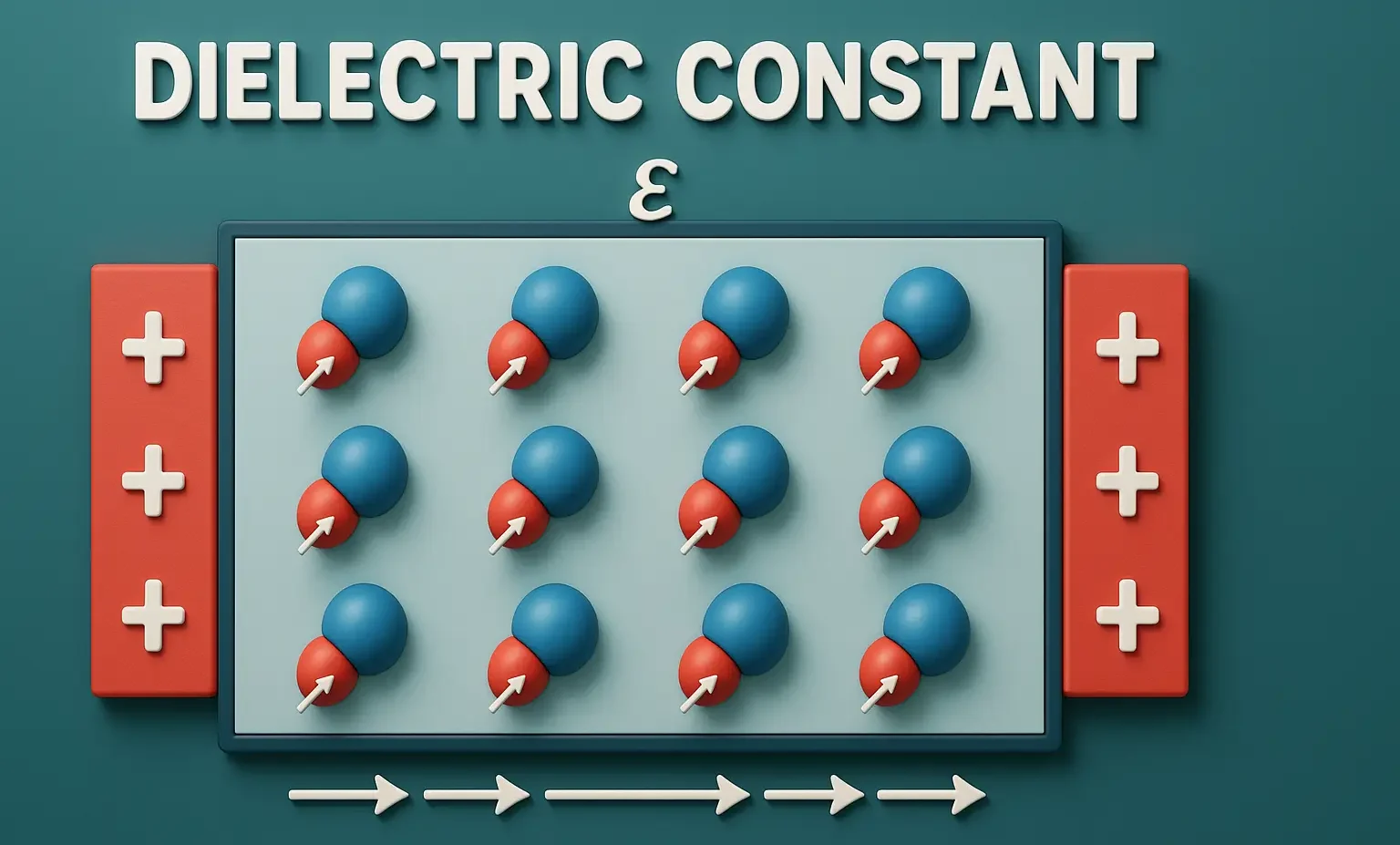
Dielectric Constant

Dielectric Constant

Definition of Dielectric Constant: Dielectric Constant Measure of a solvent’s polarity. High dielectric constant = high polarity (e.g., water = 80). Effect: High ε (e.g., water) stabilizes ionic species and may increase or decrease the rate depending on the mechanism. Solvents with low dielectric constants may: Promote neutral or non-ionic pathways Inhibit ionization-dependent reactions For … Read more

Ionic Strength

Ionic Strength

Definition of Ionic Strength: Ionic strength (μ) is a measure of total ion concentration in solution. $\mu = 12 \sum c_i z_i^2$$\mu = \tfrac{1}{2} \sum c_i z_i^2$$\mu = 21 \sum c_i z_i^2$ Where: ci​ = concentration of ion i zi​ = charge of ion i Effect: Reactions involving charged species are influenced by ionic strengths: … Read more

','

' ); } ?>