
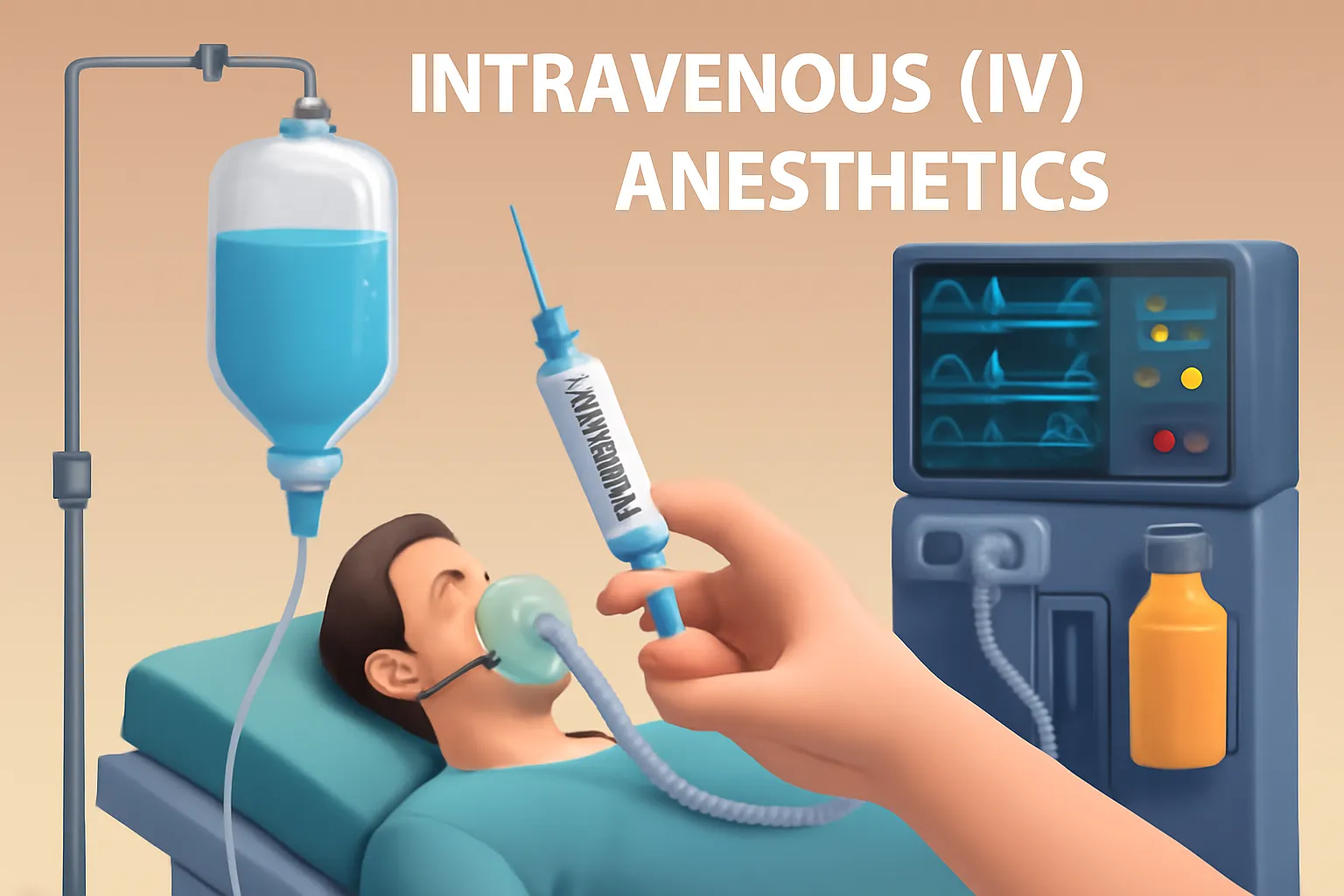
Intravenous (IV) Anesthetics induce rapid unconsciousness and are commonly used for surgical anesthesia induction.
Intravenous (IV) Anesthetics
- Rapid onset (within seconds)
- Commonly used for induction of anesthesia
- Often followed by maintenance with inhalational agents
- Suitable for short procedures
Important IV Agents
| Drug | Mechanism | Use | Adverse Effects |
| Propofol | GABA-A agonist | Induction, short procedures | Hypotension, pain on injection |
| Thiopentone | Barbiturate, GABA-A agonist | Rapid induction | Hangover, respiratory depression |
| Etomidate | GABA-A agonist | Induction in cardiac patients | Adrenocortical suppression |
| Ketamine | NMDA receptor antagonist | Dissociative anesthesia | Emergence delirium, increased ICP |
| Midazolam | Benzodiazepine, GABA-A | Preoperative sedation | Respiratory depression |
| Fentanyl | Opioid receptor agonist | Analgesia during procedures | Respiratory depression, rigidity |
Click Here to Watch the Best Pharma Videos!
Advertisements