
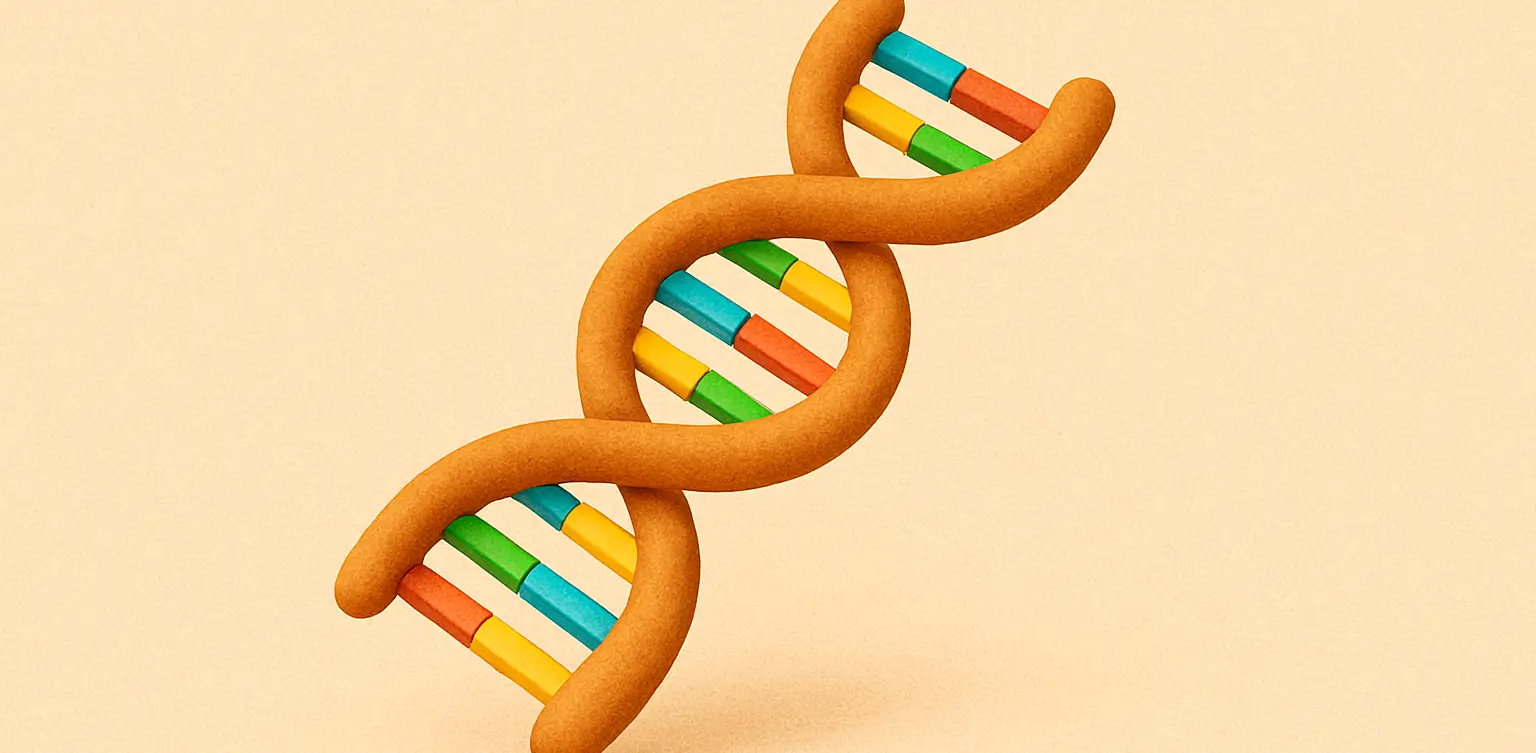
- Protein synthesis is a vital biological process where cells produce proteins, which are essential for nearly all cellular functions.
- This process is directed by genetic information in DNA and occurs in two main stages: transcription and translation.
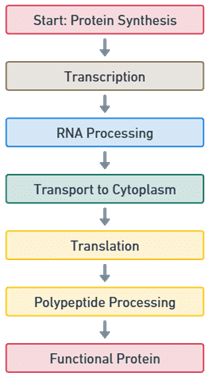
Transcription of Protein synthesis:
- Location: Takes place in the nucleus.
Process:
- Protein synthesis enzyme RNA polymerase binds to the DNA at a specific site called the promoter, initiating the unwinding of the DNA helix.
- RNA polymerase synthesizes a complementary mRNA strand using the DNA template (adenine pairs with uracil, and cytosine pairs with guanine).
- The newly formed mRNA undergoes processing, including the addition of a 5′ cap and a 3′ poly-A tail.
- The processed mRNA is then transported to the cytoplasm for the next stage.
Advertisements
Translation of Protein synthesis:
- Location: Occurs in the cytoplasm on ribosomes.
Process:
- Ribosomes read the mRNA sequence in sets of three nucleotides (codons), each specifying an amino acid.
- Transfer RNA (tRNA), with its attached amino acid, recognizes specific codons via its anticodon and pairs with the mRNA.
- The ribosome catalyzes the formation of peptide bonds, linking amino acids into a polypeptide chain.
- Translation continues until a stop codon is reached, signaling the completion of the polypeptide.
- The polypeptide then undergoes folding and modifications to become a fully functional protein.
Function of Proteins
- Proteins play crucial roles in:
- Structural support (e.g., in cells and tissues).
- Acting as enzymes to speed up biochemical reactions.
- Transporting molecules across cell membranes.
- Involvement in cell signaling and immune defense.
- The function of a protein is determined by its 3D structure, which is dictated by its amino acid sequence, directly linking genes to protein function.