Ibuprofen

Ibuprofen

Ibuprofen blocks COX enzymes, decreasing prostaglandin synthesis to ease pain and swelling. It is an NSAID used for pain, fever, arthritis, and inflammation relief. Chemical Formula: C₁₃H₁₈O₂ Mechanism of Action: Reversible COX-1 and COX-2 inhibitor Reduces prostaglandin synthesis → ↓ pain, fever, inflammation Uses: Mild to moderate pain Fever Dysmenorrhea Osteoarthritis, rheumatoid arthritis Side Effects … Read more


Ketorolac

Ketorolac blocks COX enzymes, reducing prostaglandins to provide strong analgesic and anti-inflammatory effects. It is a potent NSAID for short-term management of moderate to severe pain. Chemical Formula: C₁₅H₁₃NO₃ Mechanism of Action: Potent non-selective COX inhibitor Primarily analgesic, weak anti-inflammatory Uses of Ketorolac: Moderate to severe acute pain (short-term, post-op) Alternative to opioids Side Effects … Read more

Diclofenac

Diclofenac

Diclofenac inhibits COX enzymes, reducing prostaglandin synthesis for strong anti-inflammatory action. It is widely used to treat pain, osteoarthritis, rheumatoid arthritis, and inflammation. Chemical Formula: C₁₄H₁₁Cl₂NO₂ Mechanism of Action: Potent COX-2 > COX-1 inhibitor Inhibits PG synthesis and may inhibit LOX and lipoxygenase enzymes (minor) Uses of Diclofenac: OA, RA, ankylosing spondylitis Post-op pain, dysmenorrhea … Read more

Oxazole

Oxazole

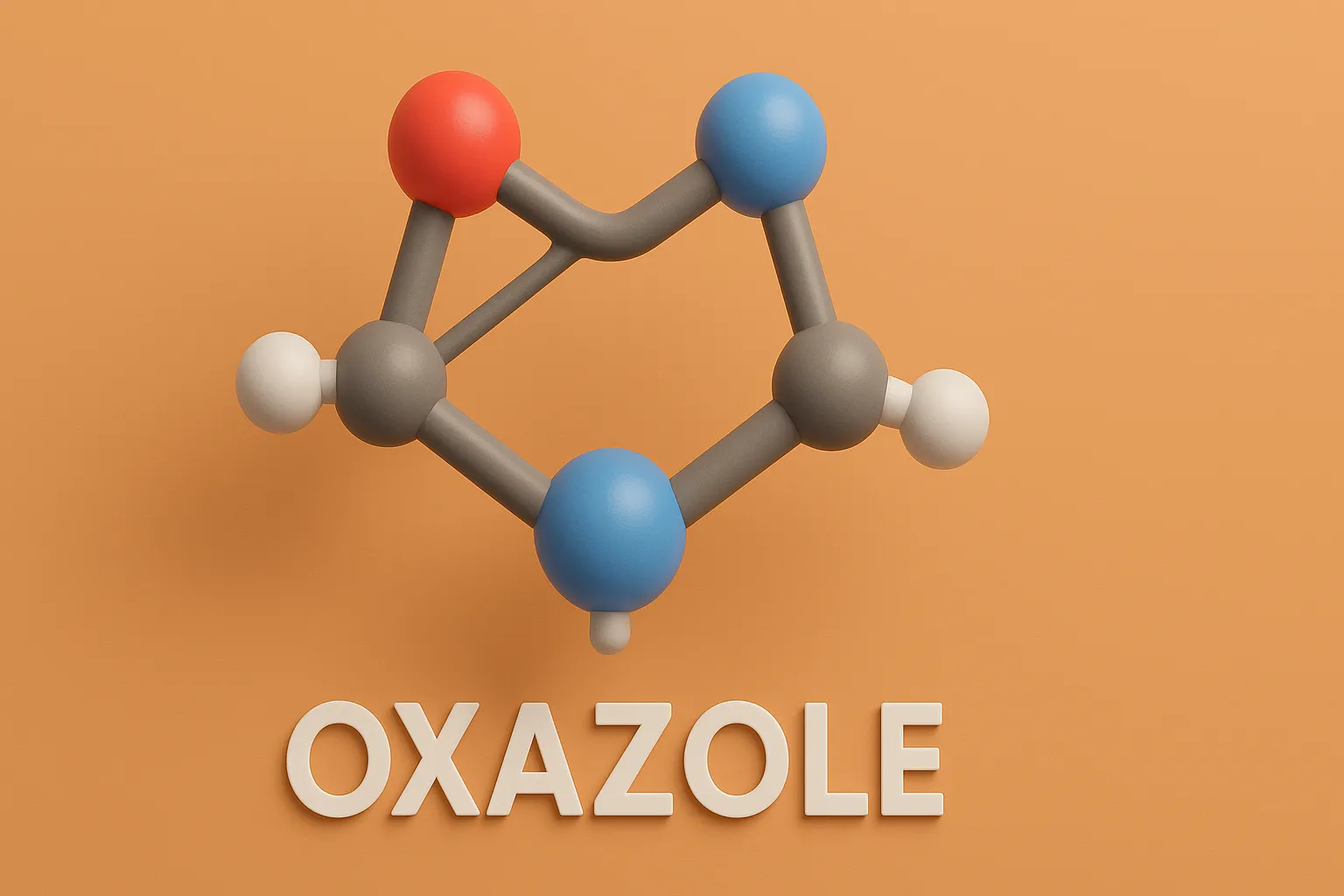
Oxazole is a five-membered aromatic heterocyclic compound containing one oxygen and one nitrogen atom, important in pharmaceuticals. Chemical Formula of Oxazole: C₃H₃NO Physical Properties: Property Value Appearance Colorless liquid Boiling Point ~69–70 °C Melting Point ~-2 °C Solubility Soluble in organic solvents Basicity Weakly basic Medicinal Uses of Oxazole: Used as a bioisostere of oxadiazoles … Read more

Reactions of Imidazole

Reactions of Imidazole

Reactions of Imidazole include electrophilic substitution at C-4/C-5 and nucleophilic substitution at C-2. Reactions of Imidazole Tautomerism: Prototropic tautomerism: 1H-imidazole  ⇌  3H-imidazole In practice, 1H-tautomer is more stable and dominates. Electrophilic Substitution Reactions (EAS): EAS occurs readily at position-4 or 5 due to high electron density. Nitration: Milder conditions than for benzene. Forms 4- or … Read more

Synthesis of Imidazole

Synthesis of Imidazole

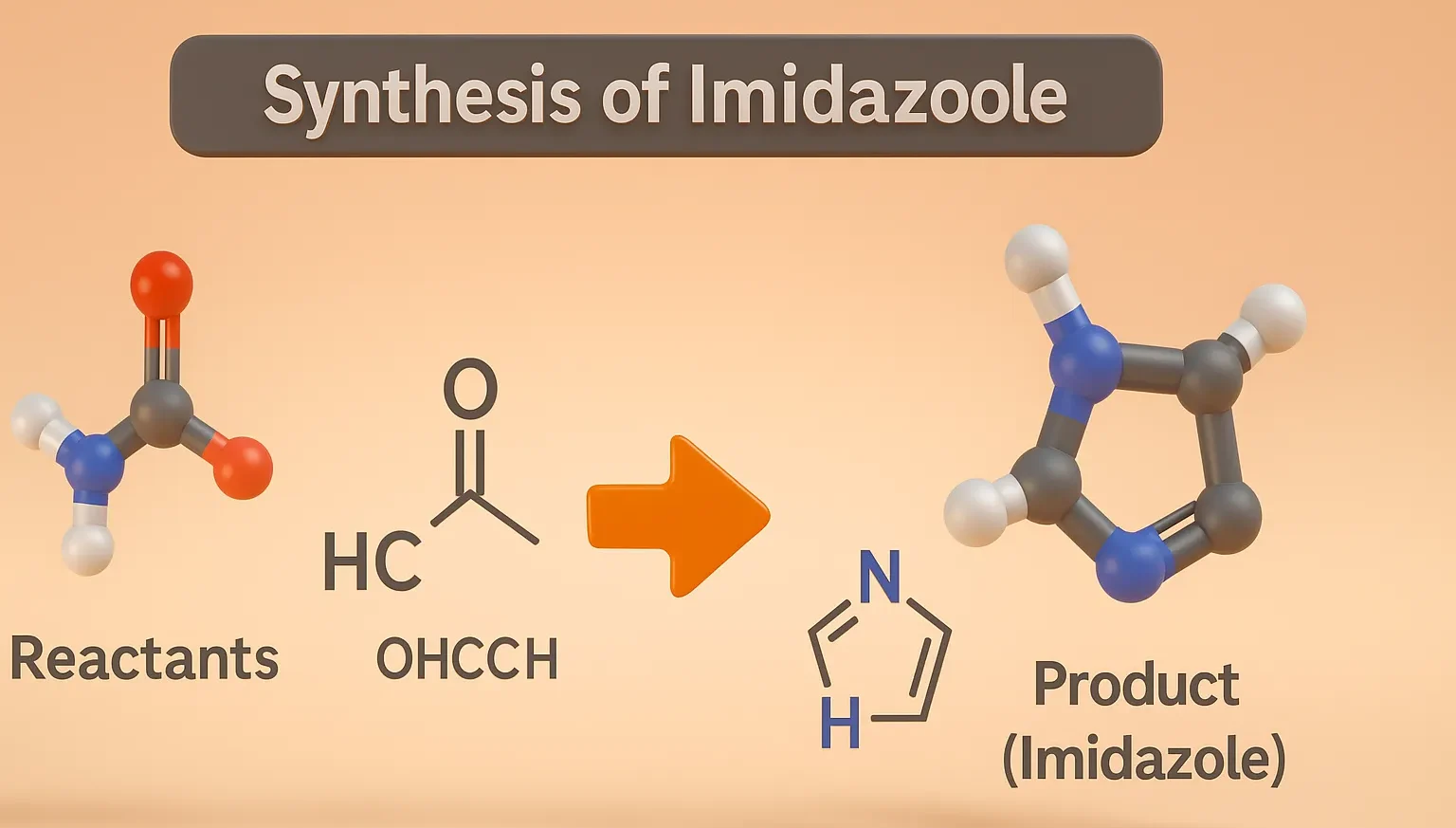
Synthesis of Imidazole includes Debus synthesis and Radiszewski method using glyoxal, aldehyde, and ammonia. Synthesis of Imidazole Debus–Radziszewski Synthesis (most commonly used) Reactants: Aldehyde (e.g., formaldehyde) 1,2-dicarbonyl compound (e.g., glyoxal) Ammonia (or primary amines) Reaction: Glyoxal  +  NH₃  +  CH₂O  →  Imidazole  +  H₂O Mechanism: Schiff base formation Cyclization via nucleophilic attack Aromatization by dehydration … Read more

Imidazole

Imidazole is a five-membered aromatic heterocycle with two non-adjacent nitrogen atoms, widely used in drugs. Chemical Formula of Imidazole: C₃H₄N₂ Physical Properties of Imidazole: Property Value Appearance White crystalline solid Melting Point ~90–91 °C Boiling Point ~257 °C Solubility Very soluble in water and polar solvents Basicity More basic than pyrazole Medicinal Uses: Present in … Read more

Reactions of Pyrazole

Reactions of Pyrazole

Reactions of Pyrazole mainly include electrophilic substitution at the 4-position and oxidation or reduction pathways. Reactions of Pyrazole Tautomerism: Pyrazole exhibits prototropic tautomerism between N-1 and N-2. 1H-pyrazole    ⇌    2H-pyrazole This affects reactivity at the nitrogen atoms and the electron density distribution on the ring. Electrophilic Substitution Reactions (EAS): Due to the electron-rich ring, EAS … Read more

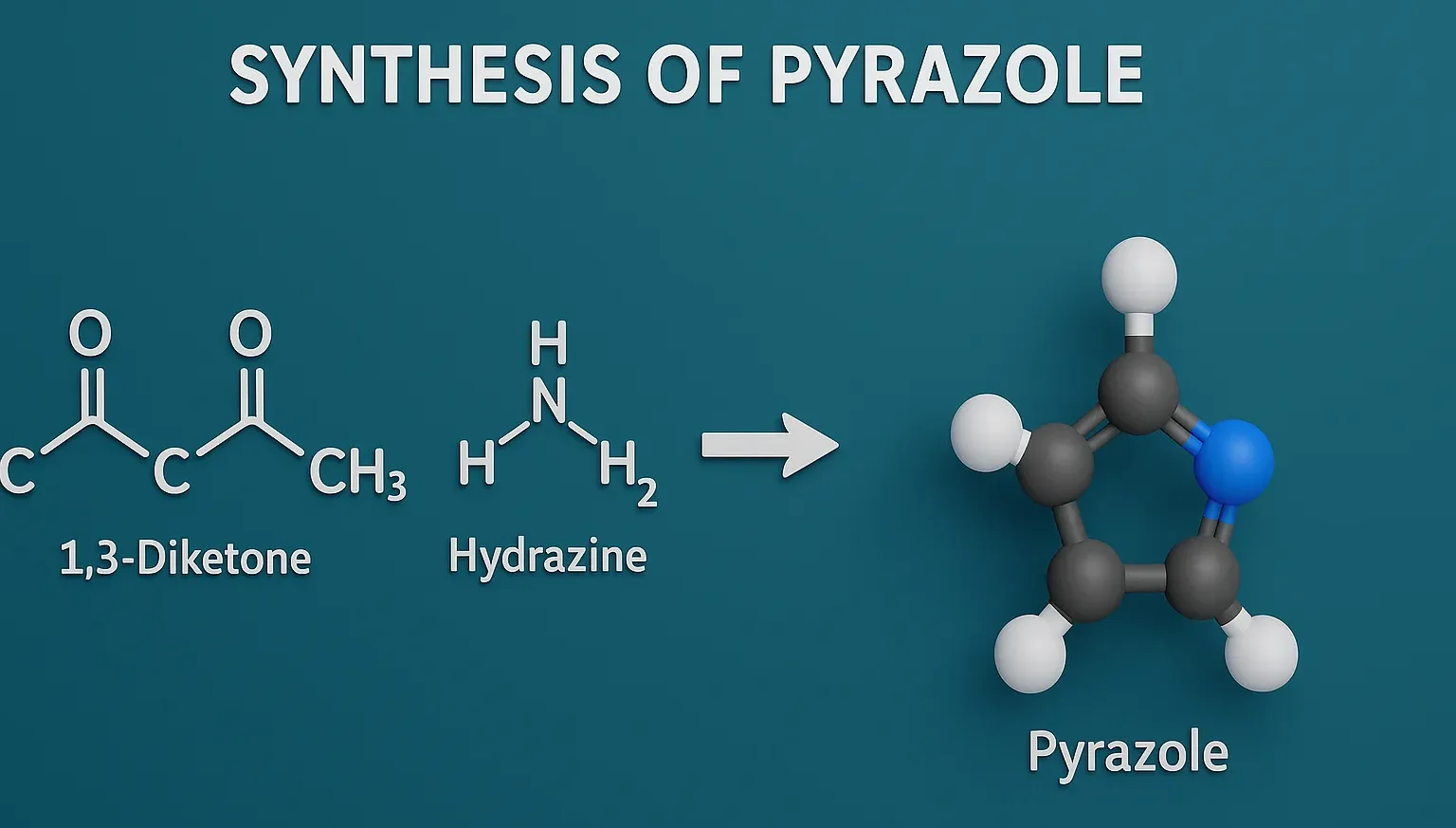
Synthesis of Pyrazole

Synthesis of Pyrazole

Synthesis of Pyrazole involves methods like Knorr synthesis using 1,3-dicarbonyl compounds and hydrazines. Condensation of 1,3-Dicarbonyl Compounds with Hydrazine (most common method) Reactants: 1,3-diketones (e.g., acetylacetone) Hydrazine (NH₂NH₂) or substituted hydrazines Reaction: CH₃COCH₂COCH₃  +  NH₂NH₂  →  3,5-Dimethylpyrazole  +  H₂O Mechanism: Formation of hydrazone at one carbonyl Intramolecular cyclization Elimination of water → Pyrazole ring Advantages: … Read more

Pyrazole

Pyrazole

Pyrazole is a five-membered aromatic heterocyclic compound with two adjacent nitrogen atoms, used in medicines and agrochemicals. Chemical Formula of Pyrazole: C₃H₄N₂ Physical Properties: Property Value Appearance White crystalline solid Melting Point ~66 °C Boiling Point ~186 °C Solubility Soluble in water, alcohol, ether Basicity Weakly basic Medicinal Uses: Found in analgesic, anti-inflammatory, antipyretic, and … Read more

','

' ); } ?>